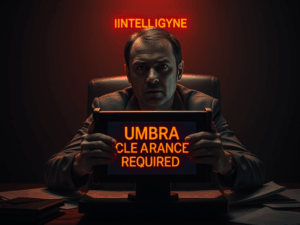
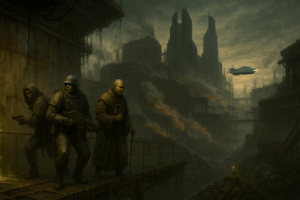
The basement of the “Blue Note” smelled of damp concrete and the kind of cheap gin that could strip the paint off a getaway car. Silas, whose face looked like a roadmap of every bad decision he’d ever made, flicked a match with his thumbnail. The flame illuminated Vinnie’s nervous eyes.
“You’re sweating, kid. Sit down,” Silas rasped. “The heist is the easy part. It’s the ‘after’ that kills you. You want to stay out of the stone hotel? You listen to the sermon.”
The Shadow Protocol
Silas blew a cloud of blue smoke. “First, you go dark. No computers, no smart-mouth phones. If it’s got a battery, it’s a snitch. And stop signing your name to things. You want a burger? Pay cash. You want a room? Pay cash. Avoid credit cards like the plague; they’re just breadcrumbs for the feds.
“Check what’s legal before you break what isn’t. And listen close: never learn what the other guys are doing. If you don’t know about their illegal acts, you can’t tell the D.A. nothing. Don’t give advice that aids the job—that’s aiding and abetting, and it’ll get you twenty years just for talking. Don’t hold the stolen goods yourself, and keep your distance from the crew. Even your wife—the law says she doesn’t have to testify, but the D.A. knows how to break a heart to open a mouth. If things get hairy, have a fall guy ready to take the tumble. Use a private dick if you need to watch your back, but keep it professional.”
The Life Insurance
“Before we hit the vault, you need a parachute,” Silas continued, leaning into the light. “You need a safe house that isn’t in your name. You go see a criminal lawyer now—put him on retainer while you’re still a ‘citizen.’ And cash, Vinnie. You need a stash. How much? Enough to buy a new life twice over. If you’re counting pennies, you’re already caught.”
The Vanishing Act
Vinnie swallowed hard. “And if they get a description?”
“Then you change the canvas,” Silas grinned, showing yellowed teeth. “You get a plastic surgeon who doesn’t ask for an ID. You get a guy to build you a new life—birth certificate, driver’s license, the works. While you’re underground, you hire P.I.s to dig up every bit of filth on the witnesses and the victims. If you can prove the prosecution’s star witness is a liar or a degenerate, the case dies in the crib.”
The warehouse was silent, save for the rhythmic dripping of a leak somewhere in the rafters. Silas looked at Vinnie, the kid’s eyes wide and reflecting the dim bulb above.
The Scenarios of Silence
“Listen close, kid,” Silas said, his voice dropping to a gravelly low. “There’s one thing that hasn’t changed in fifty years. It’s the most important lesson for anyone new to this movement.”
As if rehearsed in the marrow of their bones, they said it in unison—a jagged, synchronized bark:
“Shut the f* up!”
Silas leaned forward, the shadows deepening the lines on his face. “It doesn’t matter the time or the place. The rule is absolute.”
“Think of every way they try to crack the shell,” Silas continued, ticking them off on his scarred fingers. “You need to know what to do in every single one of these moments:
In the Van: You’re sitting in that cold police transport after a protest, shoulders rubbing against your friends? Shut the f* up.
The Holding Cell: You’re in there with your comrades, feeling the adrenaline? Shut the f* up.
The Knock: You’re at home and a cop knocks on your door ‘just to chat’? Shut the f* up.
The Device: You’re tempted to send a quick text on an unsecured phone? Shut the f* up.
The Traffic Stop: You’re pulled over after a rally and the officer is acting friendly? Shut the f* up.
The Small Talk: A cop asks how your day is going or what you’re up to? Shut the f* up.
The Family Call: The Feds call your mother, trying to spook her into talking? Tell her to shut the f* up.
“When the cops come calling, for any reason, under any sky,” Silas growled, “there is only one move on the board.”
Vinnie nodded, the weight of the words sinking in. “SHUT THE F*** UP.”
“Exactly,” Silas said, standing up and reaching for his coat. “Now, let’s go over the rest of the protections. Because once you learn to keep your mouth shut, you have to learn how to keep your trail clean.”
The Room with the Mirror
“But if the bracelets click,” Silas’s voice dropped to a low, dangerous rumble, “the real fight starts. You have a right to see a judge fast. Use it. You have a right to a lawyer. Demand him and then shut your trap. Don’t you dare try to negotiate with the interrogator. He’s not your pal. He thinks you’re guilty before he even sits down. It’s in his interest to get a conviction, and he’ll trick you without a second thought.
“The prosecutor? He just wants a win for his career. You fight for bail, and you play the strategy your mouthpiece gives you. And whatever you do, fight that ankle bracelet. It’s a digital leash that keeps you in their backyard. You follow these rules, or you’ll be counting cracks in a cell ceiling until the turn of the century.”
Silas crushed his cigarette. “Now, check the van. We move at midnight.”
Silas reached under the table and pulled up a heavy, steel-reinforced briefcase. He slammed it onto the wood, the sound echoing like a gunshot through the empty basement.
“You asked me how much is enough, Vinnie. You asked me about the ‘what ifs.’ Look at this.” He flicked the latches. The case was packed tight with stacks of non-sequential hundreds. “This isn’t just paper. This is air. It’s the ability to breathe when the world is trying to choke you.”
The Price of a New Life
“You need enough to disappear, kid. Not for a weekend, but for a lifetime. Enough for the plastic surgeon who’s going to reshape that jawline, and enough for the document generation guy who’s going to make ‘Vinnie’ a ghost and ‘Arthur Miller’ a tax-paying citizen. If you have to think twice about the cost of a private jet or a bribe at a border crossing, you haven’t saved enough.”
Vinnie reached out to touch the bills, but Silas snapped the case shut.
“Not yet. You don’t get the cash until you understand the Accomplice Law. If we’re in that van together and I pull the trigger, the law says you pulled it too. That’s why you avoid learning about the illegal acts of others. If you don’t know I have a piece, or you don’t know where the loot is hidden, you can’t be an accomplice to the aftermath. You keep your nose in your own ledger.”
Playing the Long Game
Silas stood up and started pacing the small, damp room. “Let’s talk about the Interrogator again. He’s going to play a game called ‘The Prisoner’s Dilemma.’ He’ll tell you I’ve already spilled my guts. He’ll tell you he can get the Prosecutor to go easy on you if you just ‘clarify’ a few things.”
“He’s lying,” Silas barked, spinning around to face the kid. “He will trick you without compunction. His only goal is a conviction. He doesn’t care about the truth; he cares about a closed file. You don’t negotiate with him. You don’t even tell him the time of day. You tell him you want your lawyer, and then you become a statue.”
The Strategy of the Streets
“Now, if you get to the Bail phase, that’s where the real chess starts,” Silas whispered, leaning in. “You need a strategy. You show them you’re a man of character—or at least, that’s what your lawyer shows them. But watch out for the ankle bracelet. That’s the modern-day ball and chain. You avoid that leash at all costs, Vinnie. Once they have you on GPS, you’re just a bird in a cage with a longer string. You use that stash of cash to hire private detectives to dig into the prosecution’s witnesses. You find the holes in their lives and you tear them open in front of the judge.”
Silas checked his watch. The hands were creeping toward midnight.
“And remember—Check out what’s legal first. If you can do a job where the ‘crime’ is a gray area, the D.A. has a harder time selling it to a jury. But once we cross that line tonight, there are no gray areas. Only the quick and the caught.”
Vinnie nodded, his face pale but his hands finally still. “I got it, Silas. No phones. No signatures. No talking. Just the score and the safety net.”
“Good,” Silas said, tossing Vinnie a pair of dark leather gloves. “Because the rain is letting up, and the night won’t wait for us.”
The storm finally broke, turning the city into a blurred charcoal sketch. Thunder rumbled like a heavy freight train crossing a rusted bridge, drowning out the low hum of the power grid. Then, a new sound sliced through the gale—a high, rhythmic shriek. The silent alarm at the First National wasn’t silent anymore.
Blue and red lights fractured against the sheets of rain, reflecting off the wet asphalt in jagged ribbons. In a narrow alleyway smelling of sodden cardboard and ozone, two figures were pinned against a brick wall. The cold steel of handcuffs bit into Vinnie’s wrists, the metal freezing against his skin.
“Down! On the ground!” the voices barked, lost in the wind.
Vinnie’s face hit the mud, his heart hammering against his ribs like a trapped bird. But beside him, Silas was a statue. Even as the officers hauled them toward the waiting cruisers, Silas leaned his head close to Vinnie’s ear, his voice a low, steady anchor in the chaos.
The Holding Cell: The Clock Starts
The precinct smelled of floor wax and stale cigarettes. They were tossed into a holding pen, the fluorescent lights overhead buzzing with a headache-inducing frequency. Vinnie was shaking, his breath coming in ragged gasps.
“Listen to me, kid,” Silas whispered, his back to the iron bars. “The clock is ticking now. They’ve got rules about how long they can hold you before you see a judge. Usually 48 hours. Every second of that time, they’re going to try to break you. You remember what I told you?”
Vinnie nodded weakly. “The right to a lawyer.”
“Exactly. You don’t say ‘hello.’ You don’t ask for a glass of water. You say you want your mouthpiece, and then you shut your mouth. Any negotiation with the interrogator is a sucker’s game. He’s going to come in here acting like your uncle, telling you he can help. He can’t. The goals of the prosecutor are simple: they want a conviction, a headline, and a long sentence. They aren’t looking for the truth; they’re looking for a win.”
The Interview: The Mirror and the Lie
An hour later, they dragged Vinnie into “The Box.” A single table, two chairs, and a mirror that Vinnie knew wasn’t there for vanity. A detective sat down, tossing a folder onto the table. He looked tired, almost sympathetic.
“Your partner’s already talking, Vinnie,” the detective said, leaning back. “Silas says the whole thing was your idea. If you help me out now, I can talk to the D.A. We can make a deal.”
Vinnie felt the sweat bead on his forehead. He’s lying, he told himself, hearing Silas’s rasp in his mind. Don’t trust the interrogator. He thinks you’re guilty. He will trick you without compunction.
“I want my lawyer,” Vinnie said, his voice cracking but firm.
The detective’s sympathetic mask slipped, replaced by a cold, bored stare. He stood up without a word and slammed the door.
The Strategy for Freedom
Back in the cell, Silas gave him a grim smile. “You did good, kid. Now comes the chess match. We’re going to push for our bail rights. We need a strategy to show you aren’t a flight risk—use that stash of cash to show you’ve got ties, even if they’re manufactured. But keep your eyes open.”
“For what?” Vinnie asked.
“The ankle bracelet,” Silas warned. “The state loves their digital leashes. They’ll try to make it a condition of your release. We fight that. It’s a tracking device that records every breath you take. You want to be a ghost, not a blip on a monitor. We use the P.I.s we talked about to dig into the witnesses while we’re out. We find the rot in their lives and we use it to stay out of the cage.”
Outside, the storm continued to rage, but inside the cell, the plan was as clear as the lightning strikes hitting the skyline.
The courtroom was a cavern of mahogany and stale air, a place where the clock on the wall seemed to tick in time with the judge’s pulse. Silas sat at the defense table, his suit pressed but his soul feeling frayed at the edges. He didn’t look at Vinnie. He didn’t even acknowledge the kid existed. They were strangers now, two ships passing in a very cold, very legal night.
“Keep to the plan,” Silas whispered to the ghost of his own reflection in the table’s polish. “And the wind will carry you.”
The Bail Gambit
The prosecutor, a man whose smile was as sharp and empty as a scalpel, stood up. He talked about “flight risks” and “public safety,” his voice a practiced drone. Silas’s lawyer, a high-priced shark who knew exactly how to navigate the murky waters of bail rights, rose to meet him.
The Strategy: The lawyer didn’t argue innocence—not yet. He argued roots. He presented a carefully curated version of Silas: a man with ties to the community, a man who would never dream of leaving.
The Leash: When the prosecutor pushed for an ankle bracelet, the lawyer was ready. He argued that the surveillance was an overreach, a digital shackle that hindered Silas’s ability to prepare his defense.
Silas watched the judge’s face. He needed that freedom. He had a million in bearer bonds buried under a floorboard in a house that didn’t exist on any map. If he could just get out, even for forty-eight hours, the “Silas” the state knew would cease to exist.
Phase IV: The Vanishing Point
While the legal machinery ground on, Silas ran the Post-Trouble checklist in his head like a rosary. He wasn’t planning on a trial; he was planning on a resurrection.
The New Face: The cash was already allocated. He knew a plastic surgeon in a quiet corner of the coast who specialized in “unforgettable” faces becoming entirely forgotten.
The Paper Trail: His contact for document generation was already working on the birth certificate and driver’s license. By next week, he wouldn’t just have a new face; he’d have a history, a tax ID, and a clean slate.
The Offensive: He’d already dispatched private detectives to dig into the prosecution’s star witness. If he couldn’t disappear fast enough, he’d burn the witness’s veracity and character until the jury wouldn’t believe him if he said the sky was blue.
The Final Warning
The judge leaned forward, the gavel hovering like a guillotine. Silas thought back to the interrogator who had tried to play him in the precinct. The man had been certain Silas would flip. He’d tried every trick without compunction, claiming Vinnie had already signed a confession.
But Silas knew better. He knew the goals of the prosecutor were purely transactional. A win was a win, and they’d step over anyone to get it. He’d stayed silent, demanded his right to a lawyer, and waited for this exact moment.
“Bail is set at five hundred thousand,” the judge intoned. “Bonded.”
Silas felt a cold surge of triumph. The cage door had just creaked open. Vinnie, sitting across the room, looked small and terrified, but Silas didn’t let his gaze linger. He’d taught the kid everything he knew. Now, it was up to the kid to stay quiet while Silas became a ghost.
The rain had stopped when Silas walked out of the courthouse, but the air was still heavy. He had twenty-four hours to hit the stash, hit the doctor, and hit the border.
The neon glow of the city was a memory now, replaced by the flickering fluorescent hum of a coastal bus station. Silas didn’t have a phone. He didn’t have a credit card. He didn’t even have a name—not one that belonged to him, anyway.
He’d retrieved the million in bearer bonds from the floorboards of a derelict house in the suburbs—the ultimate trackable expenditure bypass. No bank trails, no digital footprints. Just paper that breathed value.
Following the post-trouble blueprint to the letter, he had one last meeting with his contact. The man provided the documents—a birth certificate and a passport that had been aged and scrubbed until they were more legitimate than the truth. Then came the plastic surgeon, a man who worked in a basement that smelled of antiseptic and silence. When the bandages came off, the “Silas” who had walked out of that courtroom was buried under a new jawline and a reshaped nose.
Before he hit the coast, Silas made sure his lawyer received the final files his private detectives had dug up. They were dossiers of filth on the prosecution’s lead witnesses—debts, lies, and dirty laundry. It was the final move to ensure that even if the state tried to hunt him, the veracity and character of their case would be nothing but ash.
He looked back once at the city skyline, thinking of Vinnie. The kid had the right to a lawyer and the knowledge of the prosecutor’s goals. If he kept his mouth shut and didn’t negotiate with the interrogator, he’d walk on a technicality within the year. Silas had given him the tools; now the kid had to build his own cage or his own freedom.
Six Months Later
The heat in the Levant was a different kind of punishment than the rain in the city. It was dry, dusty, and smelled of cardamom and diesel. In a small café overlooking the Mediterranean, a man sat in the shade of a faded blue awning.
He wore a thick, salt-and-pepper beard that hid the faint scars of a recent surgery. He never touched a computer. He paid for his coffee with local coin and never signed a receipt. To the locals, he was just another traveler passing through, a man who kept to himself and never offered advice that aided or abetted anyone’s business but his own.
Back home, the FBI’s file on the “Multi-Million Dollar Heist” had gone cold. The fall guy strategy had worked; the leads pointed everywhere and nowhere. There were rumors, of course—whispers of a man with a striking resemblance to a ghost spotted in the Middle East.
But rumors aren’t evidence. And as the man watched the sun dip below the horizon, he knew that as long as he followed the code, the wind would keep blowing in his favor.
Silas was gone. The Ghost had finally earned his name.